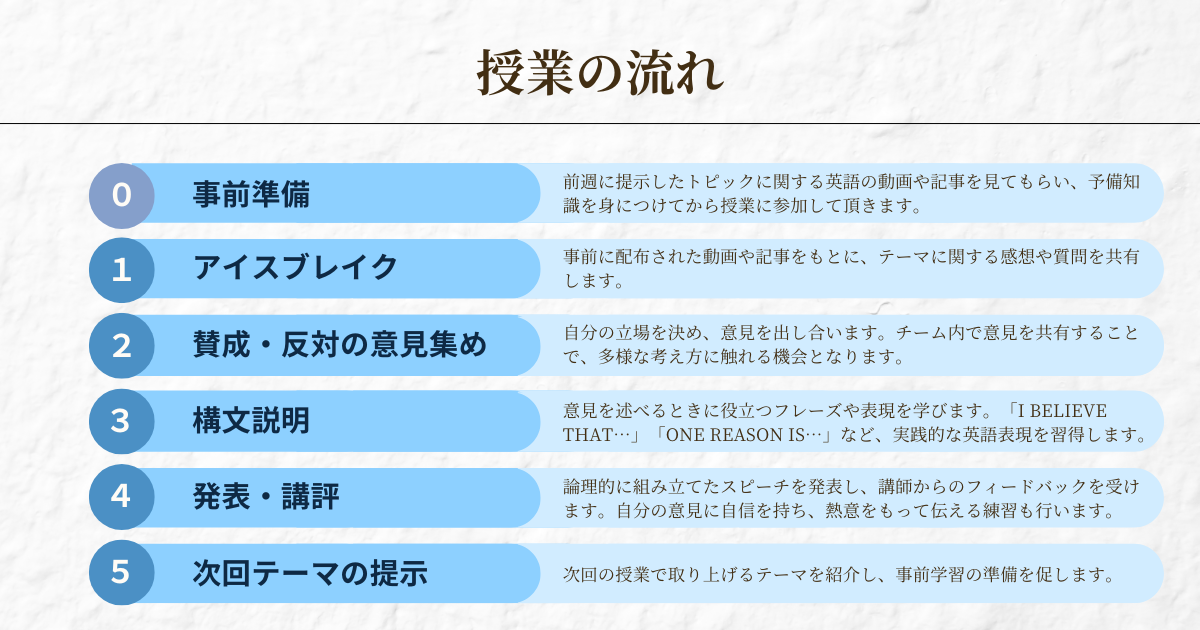
Class Flow
Our classes are not just about speaking English,The Power to Think and the Power to CommunicateOur aim is to develop these abilities in a well-balanced way.
Each lesson progresses step by step: starting with an icebreaker, then gathering pro and con opinions, studying how to structure arguments, giving presentations and receiving feedback, and finally introducing the topic for the next class. Through organizing their own ideas and practicing how to express them logically, students develop not only their English ability, but also their expressive and thinking skills.
For students,Preparation with videos and articles before classStudents are asked to complete this preparation before joining the lesson. In class, after confirming the arguments on both the affirmative and negative sides, they learn advanced expressions and vocabulary that are useful for the day’s debate. They then plan and organize their speeches, present them, and receive feedback.
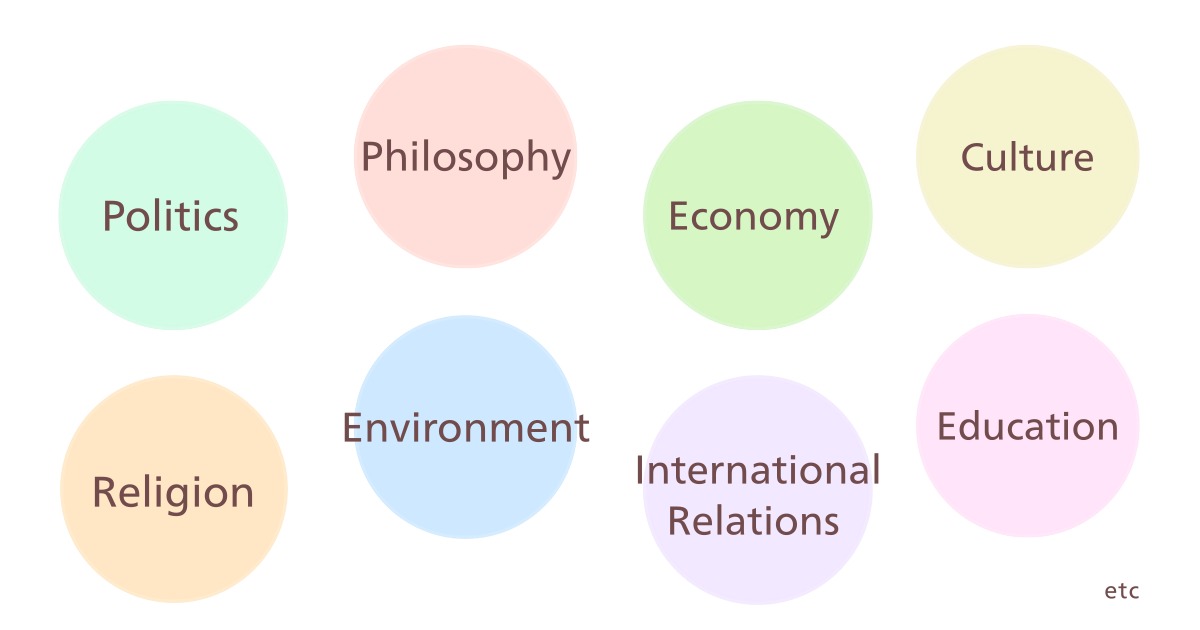
Themes used in class
In debate classes,Politics, philosophy, economics, culture, religion, environment, international relations, education, etc.In the lessons, students discuss a wide range of topics in English. From familiar, everyday themes to global issues, they are exposed to a variety of subjects, helping them develop multi-faceted perspectives and thinking skills while strengthening their ability to express their own opinions in English.
Lesson Samples
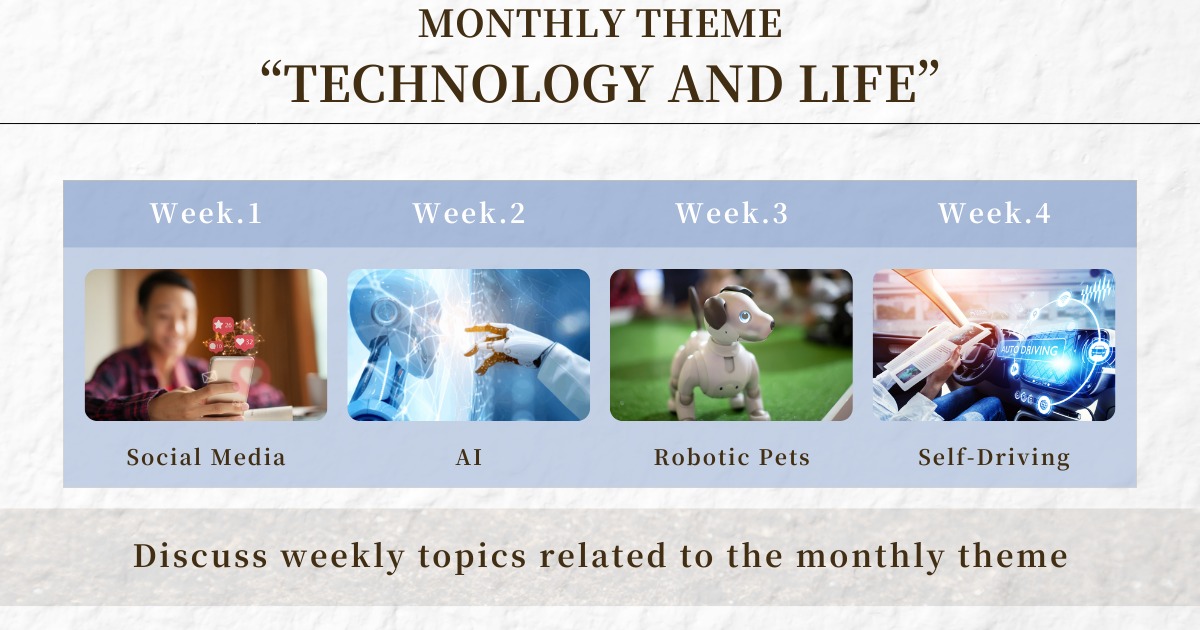
In our class,One major theme each monthShi,Weekly Related Topicshandles the
This approach allows students to develop their debating skills in English step by step, deepening their understanding over time rather than through one-off lessons.
One month's theme: Technology and Our Lives
Specific flow of classes
weekly topic
Week 1:About Social Media
0. prior learning
Before joining the lesson, students prepare by studying English videos and articles related to social media, so that they can build background knowledge in advance.
By preparing in this way, students can spend most of the class time on discussion, making deeper and more meaningful debates possible.
1. ice break
At the beginning of classHow often do you use social media?" and "Do you think it helps you stay in touch with your friends?"The teacher asks simple questions like these. By talking about their own experiences and daily habits, students become more interested in the topic and build a foundation for lively discussion.
2. confirmation of opinions in favor and against
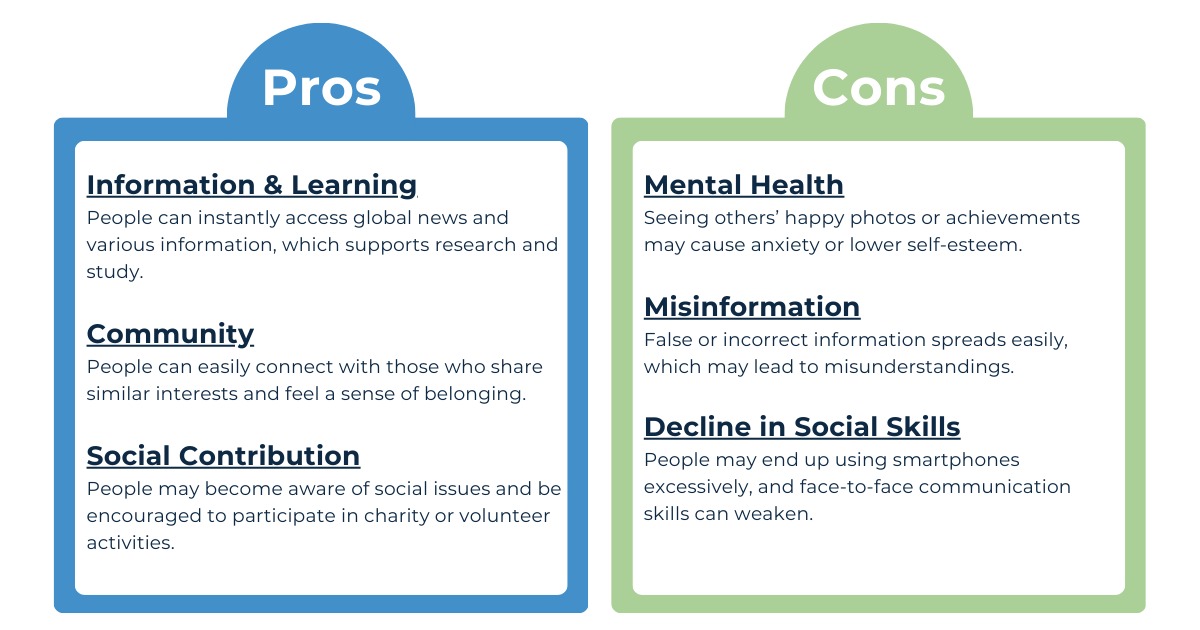
The class then organizes and shares the arguments for and against social media, summarizing the advantages and disadvantages from both the affirmative and negative sides.
Syntax Description
You will learn more advanced expressions and vocabulary that you can use in this debate.
Vocabulary for social media
Broaden opportunities
Interests
A sense of belonging
Raise awareness
Catalyze
Phrases that convey opinions logically
"I believe that..."
One reason is..."
On the other hand..."
4. presentation and comments from lecturers
Students then present their speeches as members of either the affirmative or negative side. The instructor not only evaluates the content of what they say, but also observes whether they speak confidently and whether their message is clearly conveyed to the audience, and provides feedback accordingly. Through this process, students develop not only logical thinking skills, but also expressive ability and self-confidence.
5. presentation of the next theme
The teacher introduces the topic for the next lesson and encourages students to prepare for it in advance.


First, please join us for a trial lesson (for a fee) to see if it is a good fit for your child.
 English
  Japanese
  Chinese